Every spring in Trent Hills feels like a proper reckoning. The frost lifts, the ground thaws, and suddenly the house has a list of complaints it kept quiet all winter. Some of it’s cosmetic. Some of it isn’t. Either way, the smart move is to walk through your property before the warm weekends fill up — because small repairs caught in April rarely become expensive ones in August.
We’ve put together this checklist based on the most common calls we get for general home repair across Trent Hills, Campbellford, Havelock, Hastings and the surrounding area. Use it as a starting point. Not every item will apply, but most homeowners find at least three or four things worth fixing once they actually look.
Start Outside What Winter Left Behind
Winter in this part of Ontario is hard on exteriors. Temperature swings, ice buildup and moisture all do quiet damage — and most of it only becomes visible once the snow clears. The freeze-thaw cycle alone is responsible for more cracked caulk, lifted flashing and shifted deck boards than most homeowners realize. By the time there’s an obvious problem, the underlying cause has usually been building for months.
The good news: most of this is catch-and-fix territory if you look in spring, not fall. A full exterior walkthrough takes 20–30 minutes and costs nothing. What you find will either give you peace of mind or a short list of repairs — both outcomes are useful.
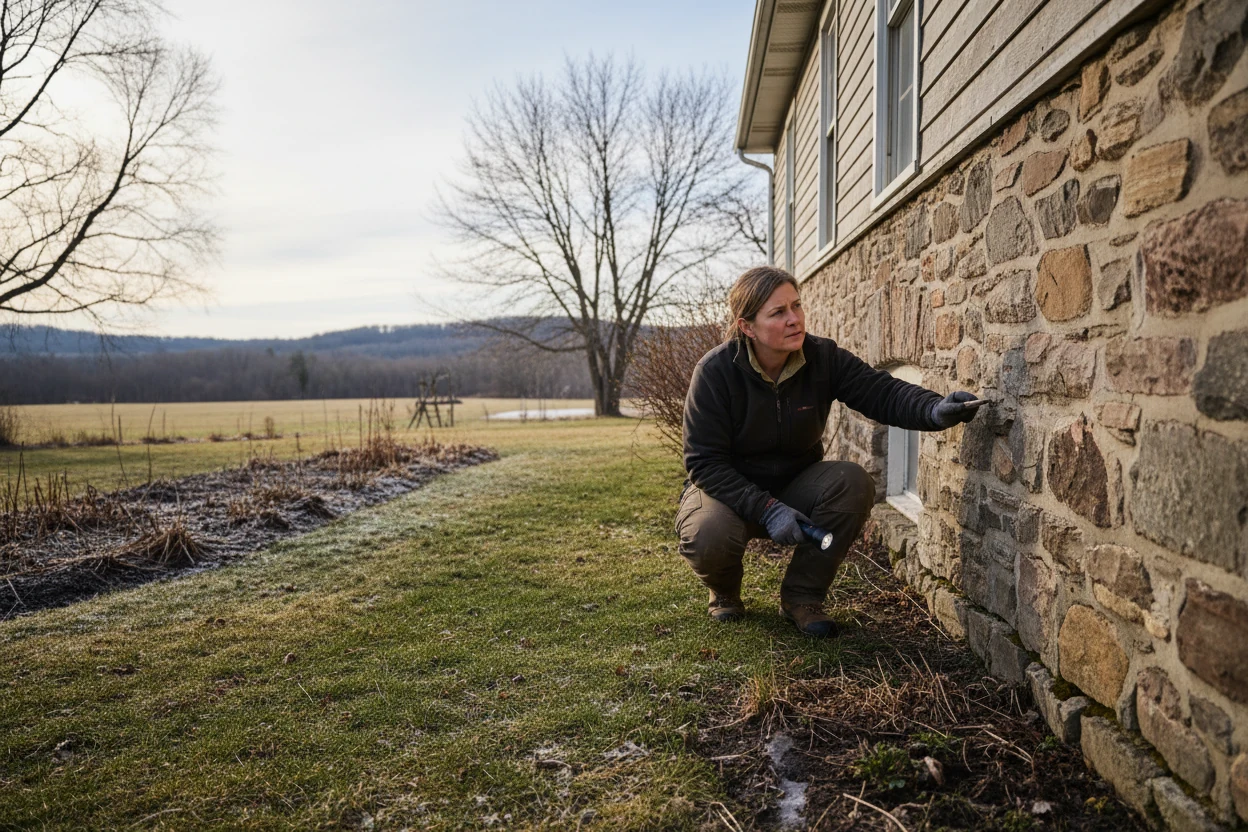
Walk the perimeter of your home before you do anything else. You’re looking for:
- Siding: Any cracked, warped or missing panels. Gaps where moisture can get behind the surface are a priority.
- Fascia and soffits: Check for rot, sagging or signs of animal entry.
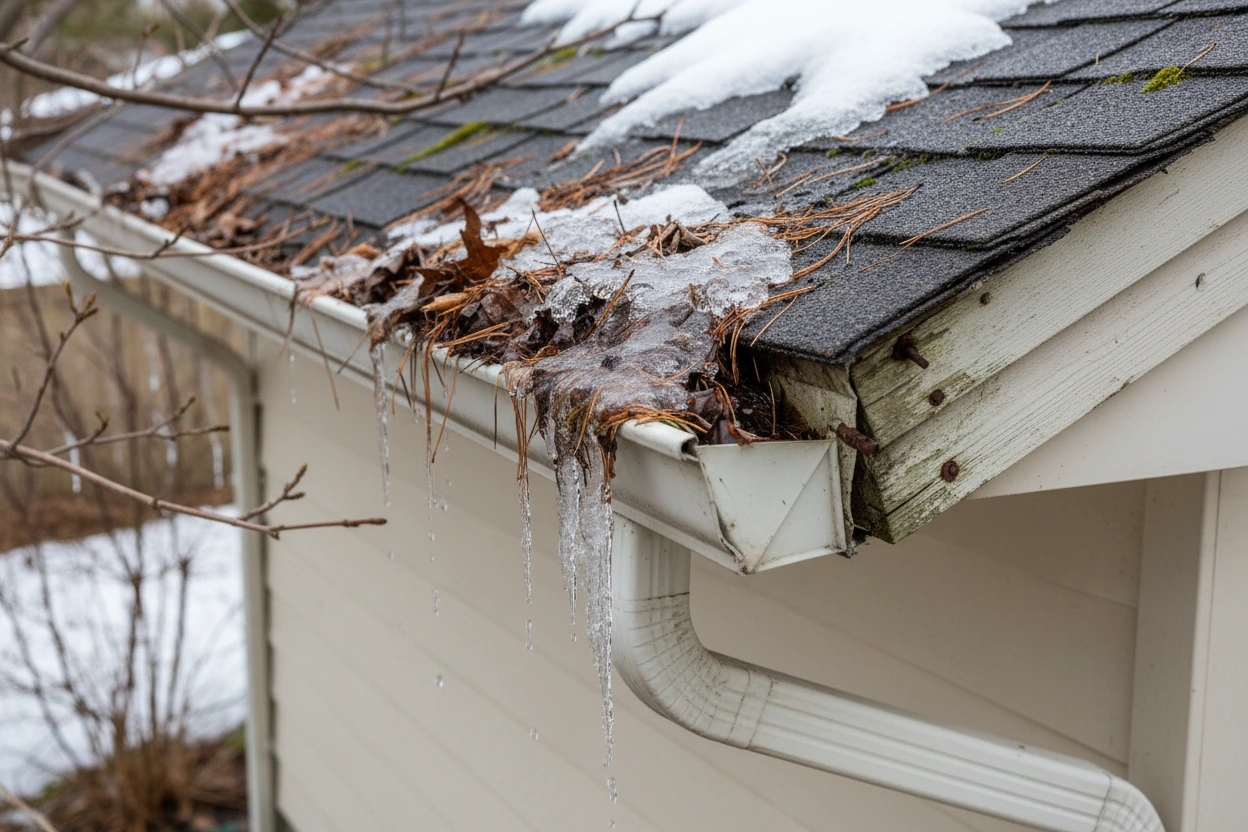
- Eavestroughs: Look for separation from the roofline, sagging sections or visible damage from ice. Clogged or detached eavestroughs direct water exactly where you don’t want it — against the foundation.
- Deck and fence: Boards that shifted over winter, loose posts, fasteners that worked their way out. Deck boards and fence rails are worth a close look before the season’s first use.
Most exterior damage is visible if you spend 20 minutes actually looking. The problem is most homeowners don’t — until a repair that could’ve been a nail and a plank becomes a structural fix.
Roof – The Area Most People Ignore Until It’s Too Late
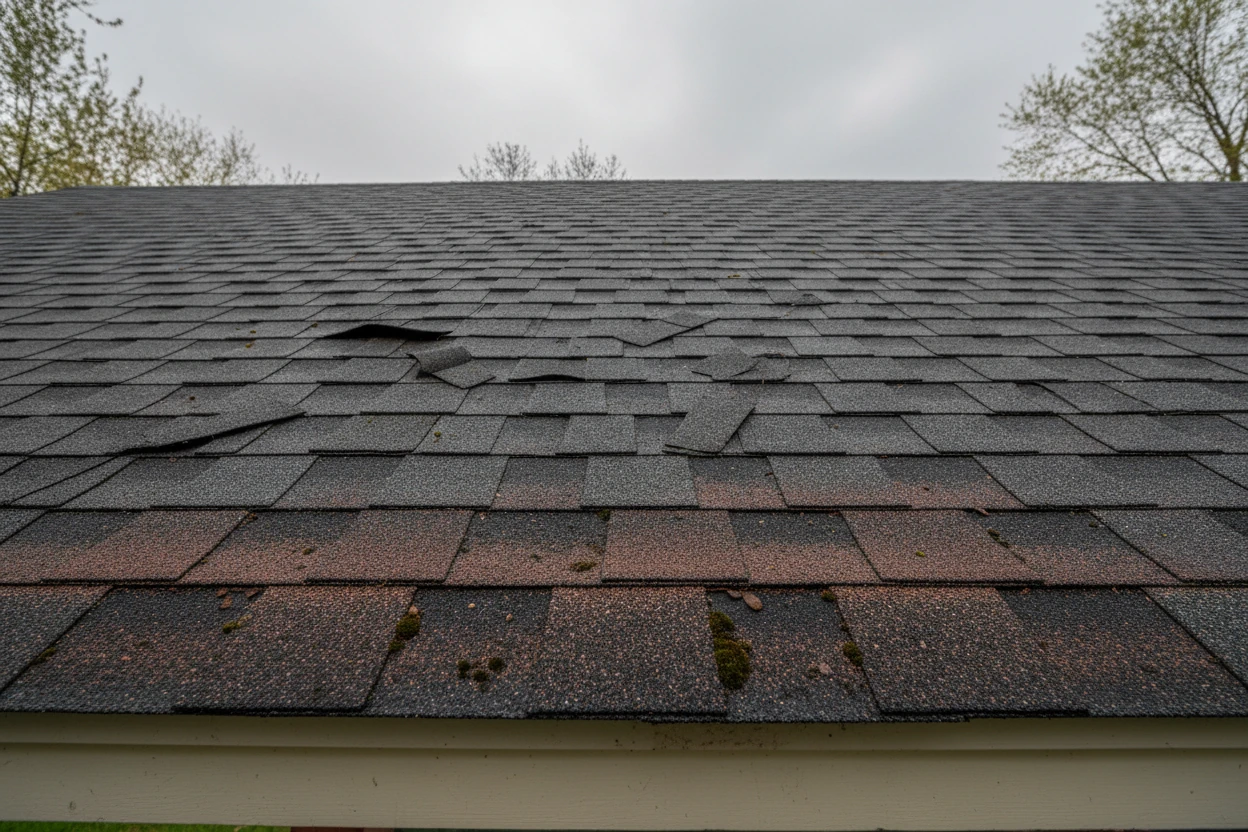
You don’t need to get on the roof to do a first check. Binoculars and a good vantage point from the yard will tell you a lot. Most visible damage — lifted shingles, dark staining, granule loss — is readable from the ground if you know what you’re looking for. What you can’t see from the yard is flashing condition and any soft spots in the deck beneath, which is why a hands-on inspection matters if you have any doubt at all.
Trent Hills roofs take a beating in winter. Ice dams form at the eaves, meltwater backs up under shingles, and by spring the evidence shows up as water stains on interior ceilings or attic insulation that’s damp to the touch. If you’ve noticed either of those inside the house, start here.
What to Look for From the Ground
- Missing, curling or cracked shingles
- Dark patches or granule loss (granules end up in the eavestroughs)
- Flashing around chimneys, vents and skylights that’s lifted or corroded
If anything looks off — or if your roof is pushing 15 years old — a professional inspection is worth the time. Roof repair caught early almost always costs less than water damage caught late.
Windows, Doors and Trim – The Air Leaks You’re Paying For
Here’s a useful test: on a windy day, hold your hand near window frames and exterior door edges. Any draft you feel is money leaving the house. In older Trent Hills homes, this is extremely common — and often ignored because the fix feels complicated. It usually isn’t.
Windows and doors that weren’t sealing perfectly going into winter are definitely not sealing well coming out of it. Cold contraction, moisture and repeated temperature cycling all work against weatherstripping, caulk and frame alignment. None of this is a structural crisis — but it does add up on the energy bill, and it’s the kind of thing that’s genuinely cheap to fix if you catch it before the seal fails completely.
Check for:
- Failed or missing weather stripping around entry doors
- Cracked or missing caulk around window frames (both inside and out)
- Trim that’s pulled away from the wall or showing rot at the bottom
- Windows that no longer close flush or lock properly
Windows and doors work that addresses both air sealing and hardware tends to pay for itself quickly — especially going into a Trent Hills summer where you’re running A/C.
Drywall, Paint and Interior Repairs – What Winter Humidity Does Inside
Heating season is hard on interior finishes. Dry air causes wood to shrink, joints to crack and paint to split. This is normal — it doesn’t mean something is wrong with your house. But it does mean spring is the right time to address it before the issues compound.
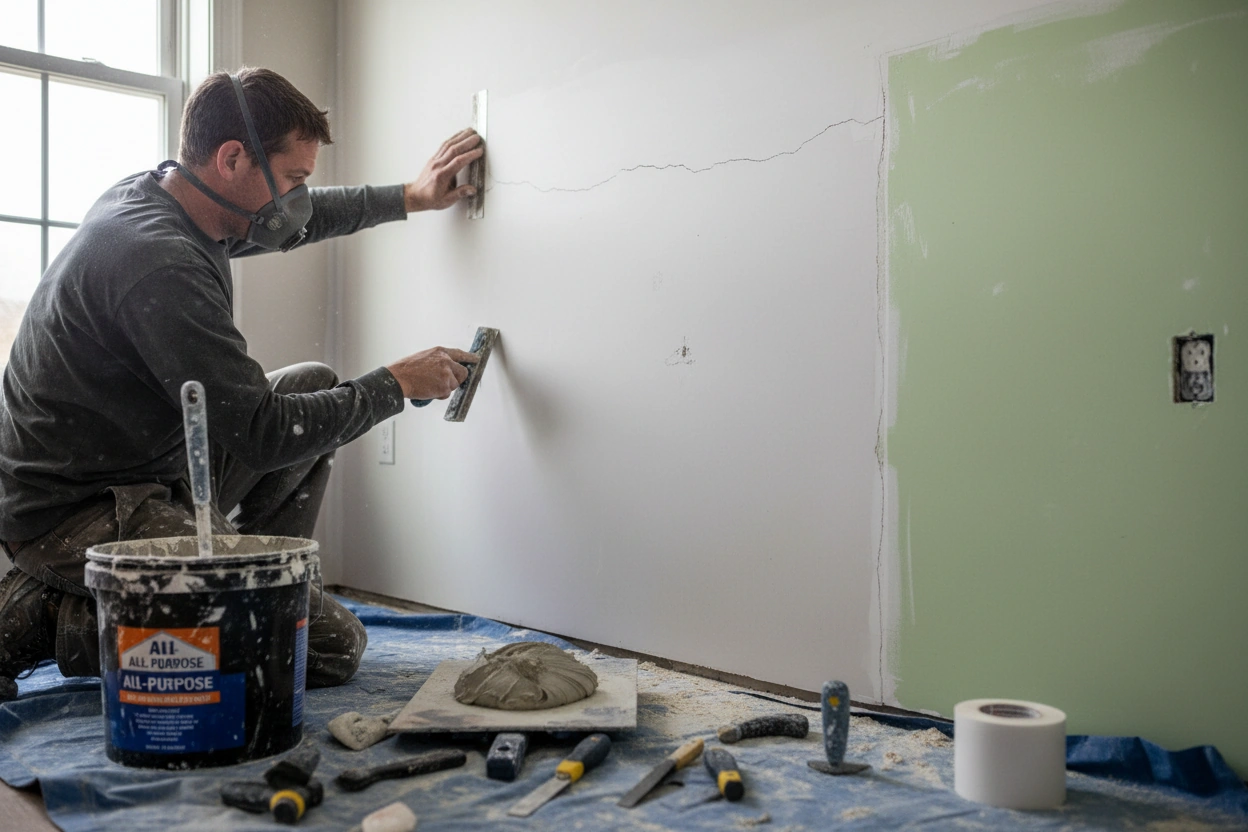
Most interior winter damage is cosmetic — nail pops, hairline cracks at corners, small gaps where trim pulled slightly away from the wall. It looks worse than it is. The cases worth taking seriously are larger cracks that run diagonally from door or window corners (those can signal settling or movement) and any area where the drywall surface feels soft or spongy, which usually points to a moisture issue behind the wall. Everything else is patch-and-paint territory.
Common Interior Repairs After Winter
- Ceilings — cracks at corners and tape joints – drywall repair, skim coat, repaint
- Walls — nail pops, hairline cracks, scuffs – fill, sand, spot paint
- Baseboards and trim — gaps at floor or corners – caulk, re-nail, replace sections
- Doors — won’t latch or drags on frame – adjustment, strike plate reposition
None of this is urgent on its own. But if you’re planning any painting this spring, do the drywall repairs first — drywall repair done properly before painting is always cleaner than patching over fresh paint.
The Repairs Most Homeowners Postpone (And Shouldn’t)
We see a pattern every spring: homeowners fix what’s visible and postpone what isn’t. Understandable. But a few of the most important repairs don’t announce themselves — they just get worse quietly. The three below come up regularly in Trent Hills, and in each case the cost of waiting is meaningfully higher than the cost of acting now.
Foundation grading. Water should move away from your foundation, not toward it. If the ground near your house has settled flat or slopes inward, spring melt and rain are pooling there. This is worth addressing before summer.
Eavestrough drainage. Downspouts that terminate too close to the foundation — or that are blocked — are one of the most common causes of basement moisture issues in this area. It’s a simple fix.
Flooring movement. Hardwood that shifted or squeaked more than usual over winter sometimes settles back. Sometimes it doesn’t. If sections are lifting or the squeaking is concentrated in one area, it’s worth a look before it gets worse.
How to Actually Use This Checklist
Walk the property once — outside first, then inside. Write down what you see. Don’t try to assess severity on the first pass; just note it. Then sort the list by what affects water management or structural integrity first, cosmetic issues second.
That approach alone puts you ahead of most homeowners. And it makes for a better conversation when you bring in a contractor — because you already know what you’re dealing with.
A few things worth noting before you call anyone: photos are more useful than descriptions. If you spotted something on the roof, a siding gap, or a crack you’re not sure about — take a picture. It saves a trip and means any estimate you get will be based on what’s actually there, not a best guess from a verbal description.

Get the Work Done Before the Season Books Up
Spring books fast in Trent Hills. If you’ve got a list of repairs coming out of winter — whether it’s one thing or several — it’s worth getting in touch now rather than in June.
Renossance handles general home repair across Trent Hills and the surrounding area. We’re a general contractor, insured and bonded, with 7+ years of hands-on experience — starting with carpentry and cabinetry, and growing into full renovations and property repairs.
Call (705) 977-4453 or email renossance.m@gmail.com to book a look.

